
#Friendship Startups Are Failing. Here’s Why Purposeful Human Calls Fill the Gap
Just days ago, Bloomberg published a quietly damning report: friendship startups built to cash in on the loneliness economy have a fundamental business‑model problem. The companies that promised to rent you a pal, match you with a brunch buddy, or sell you an AI companion are discovering that transactional companionship can’t deliver genuine belonging. It’s a story that matters for anyone watching the loneliness economy’s scramble to manufacture real human connection in 2026 — and it points toward a far more grounded alternative that’s already working.
The loneliness economy by the numbers
The numbers behind the loneliness economy are staggering. The global market for products and services aimed at isolation is projected to exceed $500 billion by 2026. In the United States alone, loneliness carries an estimated $406 billion annual economic cost, and the U.S. Surgeon General’s 2023 advisory found that roughly half of all American adults experience insufficient social connection. Among younger generations, the picture is bleaker: 74% of Gen Z globally report feeling regularly lonely, even though they’re constantly surrounded by digital social circles. And 8% of U.S. adults now say they have no close friends at all — a figure that climbs sharply when you look at adults under 30, only 32% of whom say they have five or more close friends.
Why rented friendship can’t deliver real human connection
With a problem this large, it’s no surprise that startups rushed in. But the solutions they’ve built — friendship apps, rented social experiences, premium club memberships — are failing at the very thing they claim to sell. As the Bloomberg piece notes, “Paying for companionship can offer temporary relief but rarely creates genuine connection — you can buy time, attention, and validation, but not history, trust, or belonging.” The business model itself is misaligned with the slow, friction‑full work of building relationships. As one community‑building practitioner put it, “Relationships are built at the speed of trust … Community does not scale — it’s a group of particular people grounded in particular relationships of care who share life together in a particular place. When we call loneliness a market opportunity, we inadvertently commodify the very relationships that make our lives worth living.”
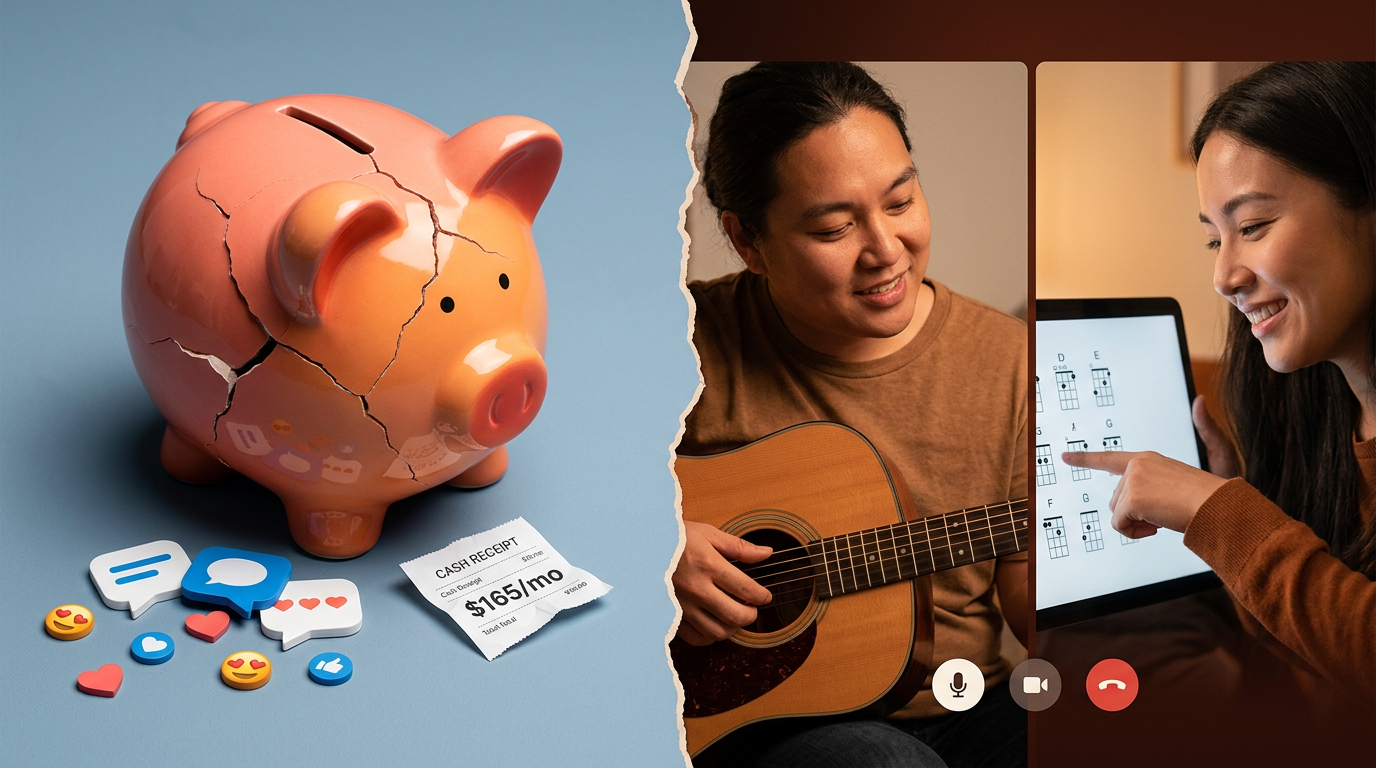
That commodification isn’t just philosophically awkward — it’s economically broken. Many friendship‑focused ventures charge premium prices (one well‑known social club costs $165 a month) that structurally exclude the lower‑income Americans who are often most isolated. Meanwhile, venture‑capital pressure demands rapid growth and frictionless scale, which is the exact opposite of what deep human connection requires. The result is a crop of startups that expand alongside loneliness rather than resolving it.
So if rented friendship doesn’t work, what does?
So if rented friendship doesn’t work, what does? The answer isn’t to give up on human contact — it’s to stop trying to buy a friend and start creating moments of purposeful, real‑time human interaction. The most meaningful connections often arise not when we’re shopping for them, but when we’re focused on a shared task, a problem that needs solving, or a skill someone is generous enough to pass on. That shift — from renting companionship to exchanging real help — changes everything.
That’s where a different model comes in: live, goal‑oriented video calls with another person who is there to help you do something specific. Not a rented friend. Not an AI pretending to care. Just a real human being who shows up to teach you a guitar chord, walk you through a tricky software installation, coach you through a workout, or help your child with a maths problem. The interaction has a clear purpose, a beginning and an end, and no pretence of lifelong friendship. And yet — precisely because it’s real, focused, and human — it often leaves both people feeling more connected than an hour of algorithmic small talk ever could.
Why purposeful video calls work
This isn’t a theoretical hope. On Wizelp, people connect for exactly these kinds of sessions every day. Someone struggling with a WiFi dead spot gets on a video call with a patient tech helper who can see their screen and talk them through the fix. A student stuck on a chemistry concept finds a tutor who explains it with a whiteboard and a smile. A new parent overwhelmed by weaning advice books books a 20‑minute call with a lactation consultant who’s been there. None of these calls are sold as friendship. They’re sold as help. But the side effect — a moment of genuine, undivided human attention — is precisely the kind of real connection the loneliness economy keeps promising and failing to deliver.
Why does this work when friendship startups don’t? First, the relationship is honest. No one is pretending to be your buddy for a fee; the transaction is transparent: you need help, someone else has the skill and the willingness to give it. Second, the interaction is anchored in a shared task, which is how many real‑world relationships form naturally — through doing something together, not through a forced social script. Third, because the call is bounded and purposeful, it sidesteps the awkwardness of “hired companionship” and leaves both parties with a sense of accomplishment rather than an emotional invoice.
The loneliness epidemic isn’t going to be solved by a single app, and Wizelp doesn’t claim to be a cure. But the platform points toward a more honest way to weave real human contact back into daily life: not by buying a friend, but by reaching out for live help when you need it, and letting the human connection come as a natural by‑product of a useful exchange. You might leave the call with a fixed printer, a new recipe, or a better understanding of quadratic equations — and also with the quiet knowledge that someone, somewhere, just spent twenty minutes fully present with you.
If you’re curious what that feels like, you can browse the kinds of help on offer or start a live help session with someone who knows the thing you’re trying to figure out. There’s no membership fee, no forced friendship, and no AI masquerading as a person. Just a real video call with a real human who’s ready to help.
For a deeper look at why real human connection is becoming the premium experience in an AI‑saturated world, you might also read our piece on what the 2026 AI backlash means for seekers of real help.