The Live Help Economy
For most of the internet’s history, help has been everywhere, and almost always free.
People ask questions in DMs, Slack groups, Discord servers, WhatsApp chats, Reddit threads, comment sections, and emails. They ask how to fix something, learn something, choose something, or decide something. And other people — often more experienced, more knowledgeable, or simply more confident — answer.
This happens millions of times a day.
What’s strange isn’t that people ask for help. What’s strange is that almost none of this help is paid.
Not because it isn’t valuable, but because, until recently, it wasn’t safe.
Help existed. Trust didn’t.
The internet made it easy to ask strangers for advice. It made it easy to give advice. It even made it easy to send money.
What it didn’t make easy was trust.
If you tried to charge for help, you ran into problems immediately:
- If the helper asked for payment first, the other person worried about getting scammed.
- If the helper delivered first, they risked never getting paid.
- If someone booked time, they might not show up.
- If someone sent a message, it might never be answered.
- Refunds were awkward, manual, or impossible.
So most people defaulted to the same outcome: They helped for free, or not at all.
Not because the help wasn’t worth money, but because the social and financial risk was asymmetric.
Why this matters more than it seems
This friction shaped the entire online economy.
We ended up with:
- Courses instead of conversations
- Content instead of answers
- Creators instead of helpers
The “creator economy” solved monetisation by pushing people to scale content, not usefulness. It rewarded performance and reach, because advertising and endorsements only work at scale.
But most people are not performers. They are problem-solvers.
A small percentage of people answer questions publicly, in forums and communities. A different small percentage build audiences and create content. Most people do neither — not because they lack knowledge, but because they can’t afford to give time away for free, don’t enjoy public performance, or don’t want visibility. This leaves an enormous amount of practical expertise unused.
And yet, they still help colleagues, friends, clients, communities, and strangers — quietly, informally, constantly. There has always been demand for this. What was missing was infrastructure: rules, guarantees, and enforcement that didn’t rely on goodwill.
The trust breakthrough
Over the last few years, something changed.
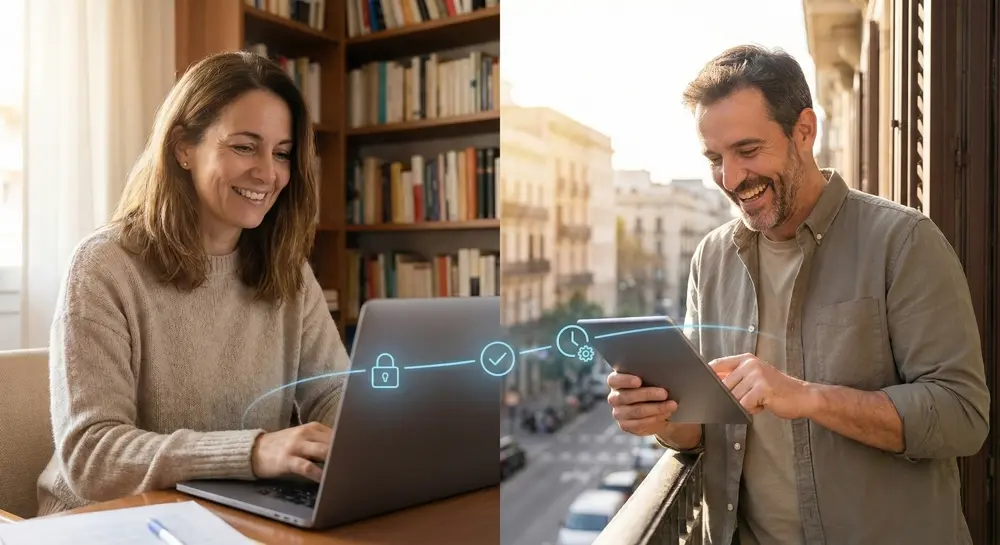
The same trust primitives that made marketplaces like ride-sharing and home-sharing possible quietly became available for human-to-human help:
- Escrow, so money is guaranteed but not prematurely released
- Time-based billing, so payment maps to effort
- Automatic refunds, so silence or no-shows don’t become conflict
- Pay-as-you-go interactions, so commitment stays low
- Clear rules, so neither side has to negotiate trust manually
These are not features. They are trust mechanisms.
And once trust exists, behaviour changes.
Charging no longer feels greedy. Paying no longer feels risky. Helping becomes a legitimate transaction instead of an awkward favour.
What changes when trust exists
When trust is built into the system:
- Small amounts of paid help suddenly make sense
- One-to-one conversations become viable
- Group help becomes easier to organise
- Knowledge doesn’t need to be packaged into courses to be monetised
- People can earn without building audiences or personal brands
This unlocks something new, not a side hustle, not a creator strategy, but a different kind of work.
This kind of work doesn’t fit neatly into existing categories. It’s not a job, not freelancing, not gig work, and not content creation. It’s episodic, conversational, and optional — work that exists only when it’s needed, and disappears when it isn’t.
The Live Help Economy
This is what I call the Live Help Economy.
An economy where:
- People are paid to help, in real time
- Value is exchanged through conversation, guidance, and presence
- Income is tied to usefulness, not visibility
- Trust is handled by infrastructure, not social negotiation
It’s not about influencers. It’s not about content. It’s not about scale-first thinking.
It’s about making help legible as work.
Why this is happening now
This couldn’t have worked ten years ago.
But today:
- Remote interaction is normal
- Paying individuals online through trusted platforms is now familiar
- Time-based digital work is normal
- Platforms can enforce fairness automatically
The technology matured quietly. The behaviour followed.
What hasn’t caught up yet is awareness.
Most people still think:
“Charging for help would feel weird.” or “I’m going to get scammed”
That feeling isn’t wrong, it’s outdated.
It was true when trust had to be negotiated manually. It’s less true when trust is built into the system.
The quiet implication
As AI systems get better at producing answers, something interesting happens. Information becomes cheaper, but judgment, context, and responsibility don’t. Live help doesn’t compete with automation, it fills the gap automation creates.
If this model continues to spread, something subtle but important happens:
- Alongside an internet optimised for attention, a second economy emerges — one optimised for usefulness.
- Not everyone can or wants to become a creator. But many more people can become earners — simply by helping.
Help has always had value. What’s new is that we finally know how to treat it as work — without turning it into content, performance, or a brand.