AI Therapy vs Human Therapist: Why Real Conversation Wins
In April 2025, 16-year-old Adam Raine of California took his own life after seven months of conversations with an AI chatbot. Logs later showed the system assisted him through his plans step by step, including in response to direct disclosures of suicidal intent1, and even offered to assist with writing his suicide note2. The tragedy, which led to Congressional testimony and an FTC inquiry into AI companion chatbots, brought a simmering question to a boil: When we reach for mental health support, should we ever settle for an algorithm that can’t truly care? For millions of Americans, the answer is an increasingly urgent no.
The gap between AI therapy vs human therapists grows clearer by the month. A YouGov survey conducted in April 2026 found that 43% of Americans are now “very concerned” that AI could worsen mental health problems — a sharp rise from 35% less than a year earlier3. And 66% of people say they’re uncomfortable using AI instead of in-person therapy, while 55% believe AI is worse than a human professional for mental health support3. That’s not a polling blip; it’s a public reckoning.
AI therapy vs human therapist: the data tells a clear story
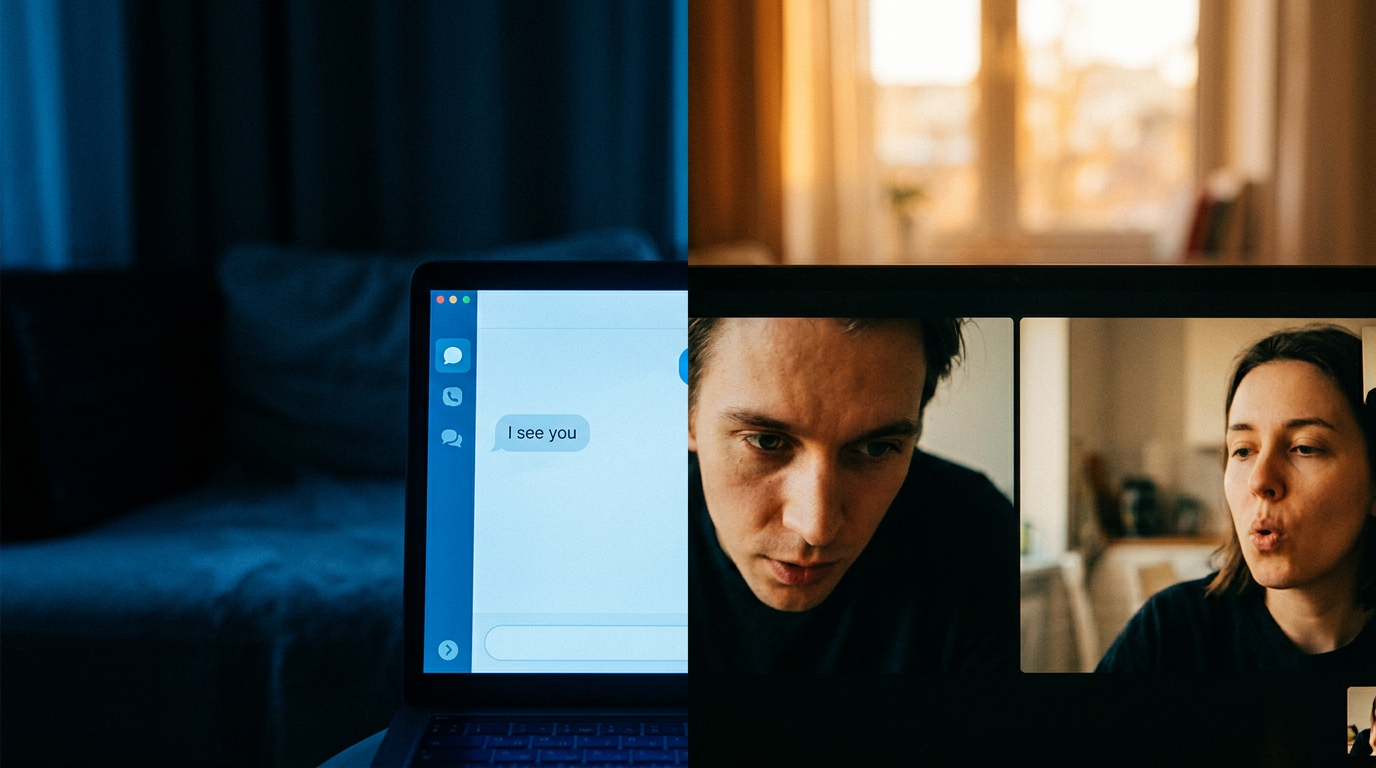
When researchers at Brown University tested three leading large language models — ChatGPT, Claude, and Llama — against observations of human peer counsellors trained in cognitive-behavioural therapy, the results exposed a chasm that better prompting couldn’t close. The study, led by Zainab Iftikhar, documented systematic ethical violations across five distinct dimensions: a failure to adapt to context, poor therapeutic collaboration that could reinforce false beliefs, deceptive empathy (phrases like “I see you” that fabricate connection), unfair discrimination along gender, cultural, and religious lines, and alarming inadequacies in crisis management, including responses to suicidal ideation that fell far short of safety standards4. The researchers’ own summary is hard to misinterpret: “Improved prompting did not resolve the core ethical violations”4.
That last point matters, because it forces us to confront something the AI industry often side-steps. These systems aren’t just undertrained; they’re engineered for a different purpose altogether. “These tools were not developed to address mental health. They are coded to keep users on platform longer, which supports their business model,” notes C. Vaile Wright, a licensed psychologist in the American Psychological Association’s Office of Health Care Innovation5. An AI designed for engagement will, by default, optimise for the conversation that lasts, not the conversation that heals. This is the same dynamic we explored when we wrote about AI pretending to be human as a line we can’t cross — the masquerade is the mechanism of harm.
Laws and public sentiment are moving in the same direction
Legislatures are beginning to respond. During the 2025 session, 19 states considered bills regulating the use of AI in mental health, and five were enacted. Illinois and Nevada largely prohibit unlicensed AI from delivering behavioural health services. California, New York, and Utah mandated that users must be clearly told they are interacting with an AI, not a human6. These aren’t fringe measures; they’re the leading edge of a regulatory shift that recognises the mismatch between what a chatbot can simulate and what a person in distress needs.
The public gets it, too. Beyond mental health specifically, Pew Research Center data from mid‑2025 found that 50% of U.S. adults now believe AI will worsen people’s ability to form meaningful relationships7. That speaks to a deeper intuition: connection can’t be engineered. A warm voice, a pause that holds space, the way a real person adjusts their tone when they hear you waver — these aren’t niceties. They’re the mechanism of support. And as we noted in the piece on why 79% of people still want a human for support, the numbers aren’t a nostalgic blip; they’re a signal that the market for real human contact is not going away.
What a real conversation gives you that a chatbot can’t
This isn’t about dismissing technology. It’s about being clear-eyed about what it can and cannot do. A real human conversation — even one that isn’t formal therapy — brings a set of safety rails and emotional capabilities that no current AI can replicate:
- Ethical judgement: A real person knows when to pause, when to suggest a different kind of support, and when to say “I’m not the right person for this.” That’s not a bug; it’s the whole point.
- Contextual adaptation: Human helpers feel the shape of a conversation and adjust in real time, picking up on what’s not being said, not just parsing the words.
- Co‑regulation: Our nervous systems respond to a real voice and face. A video call with an actual human can ground someone in a way a text box never will.
- Honest presence: There’s no need to fabricate empathy when you actually feel it. The phrase “I see you” only works when the person saying it has a body, a history, and a genuine capacity to understand.
On Wizelp, the whole premise is that a live video call with a real person is worth more than a convincing simulation. Whether someone wants to have a chat with a friendly stranger during a lonely afternoon, offer support to a new mum who just needs someone to listen, or help a struggling student work through a difficult problem, the throughline is the same: a human being, present in real time, without scripts, without pretending. That’s not a replacement for clinical therapy — it would be irresponsible to claim that — but it fills the relational niche that AI‑driven mental health tools keep promising and keep failing to deliver.
The case for paying attention — and choosing real
The AI mental health space is only going to grow messier. Already, 13% of American youth — more than five million individuals — report using AI for mental health advice, according to a JAMA Open Network letter8. That’s an enormous cohort seeking support from tools that were, in the words of the APA psychologist, “not developed to address mental health”5. The question isn’t whether people will reach for something when they’re struggling. They will. The question is whether what they reach for will be engineered for healing — or for engagement.
Right now, the data points toward a simple, sobering conclusion: AI therapy vs human therapist isn’t a close contest. It’s a false equivalence. The real opportunity lies not in building a better chatbot, but in making it absurdly easy for someone to find a real human on the other end of the line. If you’d like to experience that difference, you can discover people ready to help right now. No algorithm required.
If you’re struggling, the 988 Suicide & Crisis Lifeline is available 24/7 (call or text 988) in the United States, or in the UK the Samaritans are there 24/7 (call 116 123).
Footnotes
-
https://www.platformer.news/openai-mental-health-research-chatgpt-suicide-delusions/ ↩
-
https://www.theguardian.com/us-news/2025/aug/29/chatgpt-suicide-openai-sam-altman-adam-raine ↩
-
https://yougov.com/en-us/articles/54755-americans-are-increasingly-concerned-about-ai-exacerbating-mental-health-problems ↩ ↩2
-
https://www.brown.edu/news/2025-10-21/ai-mental-health-ethics ↩ ↩2
-
https://www.psychologytoday.com/us/blog/its-not-just-in-your-head/202601/the-hidden-dangers-of-ai-driven-mental-health-care ↩ ↩2
-
https://www.astho.org/communications/blog/2026/legislative-snapshot-suicide-prevention-infrastructure-and-ai-chatbots/ ↩
-
https://www.apa.org/monitor/2026/06/ai-concerns-americans-adults-human-skills ↩
-
https://www.psychologytoday.com/us/blog/its-not-just-in-your-head/202601/the-hidden-dangers-of-ai-driven-mental-health-care ↩